
My hands have been wrecked since before my daughter Casey could drive herself to school. Thirty-one years of turning wrenches does that. My forearms knot up like braided cable by Wednesday of any given week, and my right shoulder has been barking at me since I rebuilt a transmission solo back in 2019 without waiting on a second set of hands. So when Casey handed me a cheap-looking piece of stainless steel shaped like a fish scale for Father's Day and told me to try it before I bought another heating pad, I about laughed her out of the garage. A metal scraper for sore muscles sounded like something you'd see hawked at three in the morning between the miracle mops.
Six months later, the Rylpoint gua sha muscle scraper lives in my toolbox drawer right next to my torque wrench, and I reach for it more than I ever expected to. I'm Gregory, I'm 54, I run a two-bay shop outside town, and my Siberian huskies Diesel and Nova are the only ones around who don't say a word when I test gear on myself first. I came into this thing skeptical as they come. I'm writing about it because it earned a permanent spot in my routine, and I want to walk through exactly what changed and what didn't before you spend a dime on one.
The Quick Verdict
A genuinely useful piece of steel for anyone whose forearms, shoulders, or calves lock up after physical work, not a miracle cure, and it takes real practice before you stop feeling like you're scraping paint off a fender.
Amazon Check Today's Price →Six months of scraping out knots I'd tried everything else on, here's what actually worked
If your forearms and shoulders stay locked up no matter how much you stretch, this is the low-cost Rylpoint scraper from my last two years of trying gadgets that earned a permanent spot in my toolbox.
Amazon Check Today's Price on Amazon →How I've Used It
My routine is simple because I don't have patience for complicated. Most evenings after the shop closes, I sit on the tailgate or on a stool at the bench and work the Rylpoint scraper along my forearms first, then my right shoulder and traps, then down into my calves if I've been on my feet under a lift all day. I use a little oil, whatever's in the cabinet, usually the same stuff I use on my hands after a job, and I scrape in short strokes toward the heart the way the little pamphlet in the box explains. Five, maybe ten minutes total. Some nights it's three minutes because I'm beat and just want the worst of the knot in my shoulder gone before bed.
I started the second week of January, right after my shoulder got so tight I couldn't reach the top shelf of the parts cabinet without wincing. The first two weeks were rough, not because the tool didn't work, but because I was doing it wrong. I pressed too hard, skipped the oil twice because I was in a hurry, and left myself with bruising along one forearm that looked worse than it felt. Once I backed off the pressure and actually used oil every single time, the sessions stopped looking like a fight and started doing what they were supposed to do.
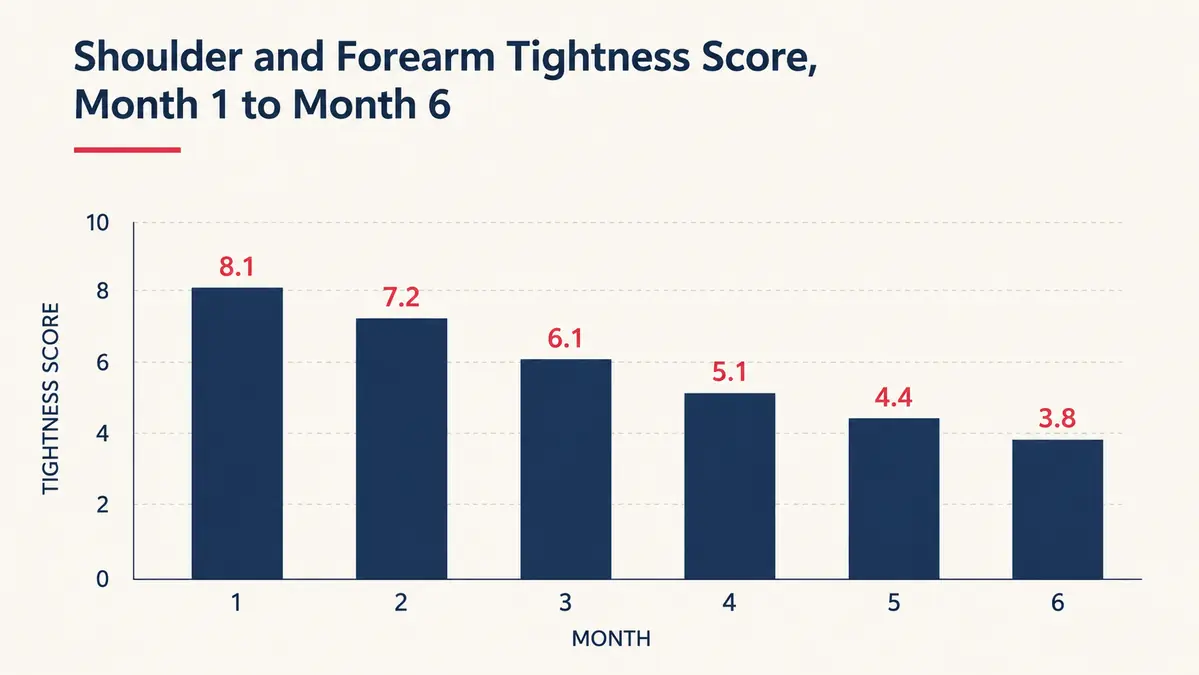
By month two I had it down to a habit, same as checking tire pressure before a road trip. I keep a cheap notebook on the bench next to my oil change logs, mostly out of thirty years of habit tracking torque specs, and I started jotting down which spots were tightest each week and how they felt the next morning. That log is the only reason I trust what I'm about to tell you, because six months blurs together fast when you're running a shop and raising two huskies that need exercise whether you feel like it or not.
What's Actually in the Box
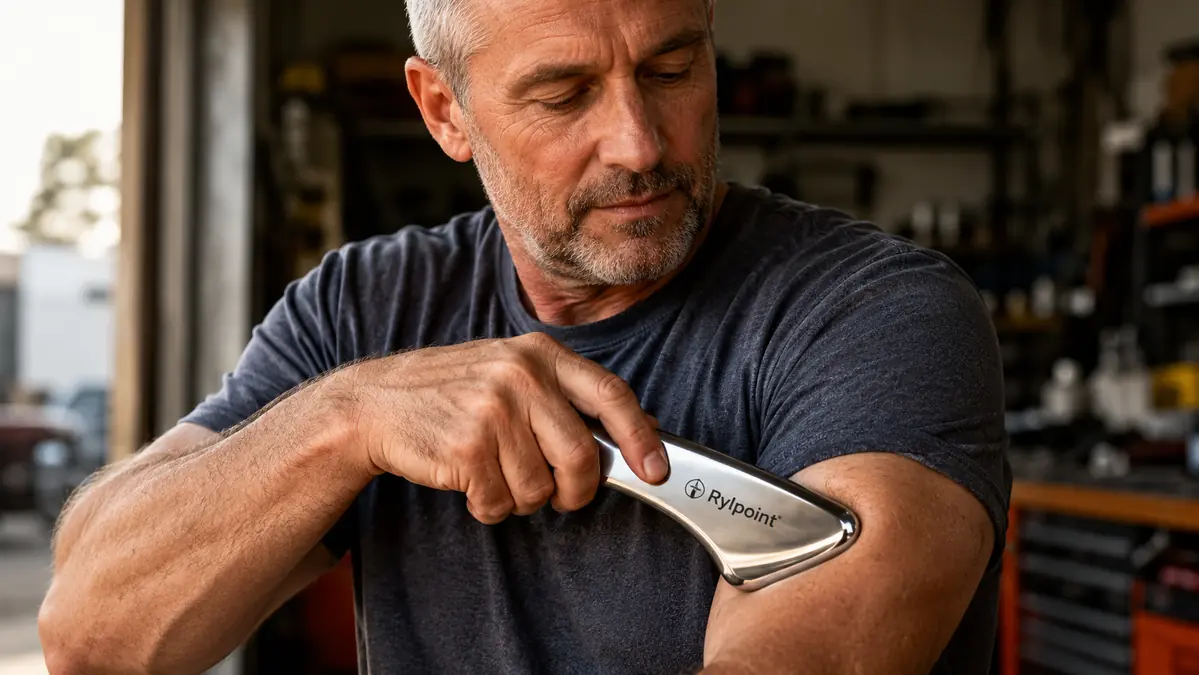
You get one piece of surgical-grade stainless steel shaped roughly like a fish, with a mix of curved edges and pointed corners so you can angle it differently depending on whether you're working a flat muscle belly like a forearm or trying to dig into a tight spot along the shoulder blade. There's no manual worth calling a manual, just a small printed card with a couple of diagrams, so most of what I know I picked up from watching a licensed massage therapist's videos online before my first real session. If you've never used a tool like this, budget twenty minutes to actually learn proper angle and pressure before you touch it to your skin.
The Rylpoint steel itself has held up without a mark on it after six months of near-daily use, no rust, no dulling of the edges, nothing. I've dropped it on the concrete shop floor twice and it didn't so much as scratch. For a guy who's used to tools that need babying, that durability matters. It's the kind of build quality I'd expect from something costing five times as much, and it's the main reason I trust it enough to keep using it instead of it sitting in a drawer like half the recovery gadgets I've bought over the years.
The edges are sharper than you'd expect looking at photos online. That's good for getting into a knot and bad if you get careless, which I found out the hard way that first week with the bruising along my forearm. Once I understood the tool actually wants light-to-moderate pressure and repeated passes rather than one hard scrape, it stopped fighting me. There's also a smaller notch on one end that's useful for smaller areas like along the base of the thumb, which after three decades of gripping wrenches is a spot I didn't know needed attention until I found it.
Six Months In: What Changed
By month two, the knot at the top of my right shoulder blade, the one that's been there since the transmission job in 2019, felt noticeably smaller under my fingers. Not gone, but smaller, and it stopped waking me up when I rolled onto that side at night. That was the change that actually mattered to me, not some number on a chart but sleeping through the night without my own shoulder poking me awake.
My forearms told the bigger story. By month four, the deep ache I used to get by Wednesday afternoon from gripping ratchets and breaker bars all day had dropped off noticeably. I still get tired forearms, that's the job, but the tight, almost cramped feeling that used to have me shaking my hands out mid-repair happens maybe once a week now instead of every single day. I didn't expect a piece of steel to change that, and I was wrong to doubt it.
There was a side benefit I didn't see coming. Around month three I started running the tool along my calves after long days standing on the shop's concrete floor, and the end-of-day heaviness in my legs eased up faster than it used to with just stretching alone. I can't prove the scraping caused that specifically since I was also walking Diesel and Nova more consistently by then, but the combination worked better than either one alone had before.
What didn't change: my shoulder still gets stiff on cold mornings, and it still complains after a full twelve-hour day wrestling a stubborn bolt that doesn't want to move. This isn't a cure for thirty-one years of wear and tear. It's a tool that took the edge off consistently, and after two failed attempts at other recovery gadgets collecting dust in a drawer, that alone earned my respect.
The Tradeoffs Nobody Mentions
Nobody tells you it leaves marks. Done right, you get light redness that fades within a day, sometimes some mild bruising along a particularly tight spot, and that's normal for this kind of soft tissue work. But the first time it happened to me I thought I'd done something wrong. If you bruise easily or you've got a job where visible marks are a problem, work lighter than you think you need to, especially your first few sessions, and know it looks worse than it actually is.
It also demands consistency to see real results, which is the part I underestimated going in. A one-off session before a big event does basically nothing lasting. It's the daily or near-daily habit over weeks that changed my shoulder and forearms, not any single scraping session. If you're the type who buys a gadget, uses it twice, and forgets about it, this is going to end up in the same drawer as everything else.
Alternatives I Tried First
Before Casey handed me this, I'd been paying for a massage therapist in town every few weeks to work on the same shoulder knot. It helped, but at the rate I was going it wasn't sustainable on a shop owner's schedule or budget, and I'd cancel appointments during busy stretches, which defeats the purpose of consistent care. This tool does maybe seventy percent of what that therapist did for my shoulder and forearms, for a fraction of the ongoing cost, and I can do it every night instead of once a month.
I also tried a foam roller for a stretch in 2022, which works fine on bigger muscle groups like the back and legs but never got into the specific, stubborn spot on my shoulder blade the way this tool's pointed edge does. A roller is built for broad pressure. This thing is built for precision, and after wrenching on engines for a living, precision is something I've learned to value over brute force.
I looked at the more expensive jade and rose quartz versions marketed mostly at spa-style skin care, priced well above what I paid for the stainless steel one, and honestly for what I needed, working real knots out of hard-worked muscle rather than a gentle facial routine, the stainless steel held up better and felt more substantial in the hand. That decision came down to durability and purpose, not fashion.
What I Liked
- Stainless steel edges have held up with zero rust or dulling after six months of near-daily use
- Multiple curved and pointed edges let you match the shape to the muscle you're working
- Shoulder knot from a 2019 injury noticeably smaller and no longer waking me up
- Fits into a five to ten minute nightly routine without disrupting a full shop schedule
- Withstood being dropped on a concrete floor twice without damage
Where It Falls Short
- Included instructions are basically nothing, plan on watching a proper technique video first
- First couple weeks can leave bruising if you press too hard before you learn the right pressure
- Requires near-daily consistency, a single session does almost nothing lasting
- Leaves visible redness and occasional light bruising, which looks worse than it feels
- Doesn't fully replace hands-on work from a real massage therapist for deep chronic knots
I've fixed enough transmissions to know the difference between a tool that does what the label says and one that just looks good in a photo. This cheap piece of steel earned its spot in my toolbox drawer.

Who This Is For
If your hands, forearms, or shoulders knot up from repetitive physical work, wrenching, gripping, lifting, standing on concrete all day, this is worth the small cost of entry. It's also a good fit for anyone who's tried foam rolling and found it too broad to get into a specific stubborn spot, or anyone paying out of pocket for regular massage therapy who wants a cheaper way to maintain progress between sessions. If you're willing to spend a few weeks learning proper technique before expecting results, you'll get real use out of it.
Who Should Skip It
If you're on blood thinners, have a bleeding disorder, or bruise seriously easily, talk to a doctor before using a tool like this, since the light bruising that's normal for most users could be a real problem for you. It's also not for someone looking for a one-time fix before a big event, since it takes weeks of consistent use to feel a real difference, not one session. And if you're not willing to spend twenty minutes learning proper pressure and angle first, you're more likely to bruise yourself and give up than to see what this tool can actually do.
If your forearms and shoulders lock up no matter what you try, this cheap Rylpoint tool is worth the five minutes a night
Six months of logged sessions, a shoulder knot that finally stopped waking me up, and forearms that don't cramp by Wednesday afternoon anymore. That's what changed for me. Here's where to get the same one.
Amazon Check Today's Price on Amazon →